There were television shows we watched to scare us.
And some of those shows started scaring us before the episode even began.
Sometimes it was the eerie music. Sometimes it was a creepy voice. Sometimes it was a montage of strange images that made absolutely no sense but somehow communicated one very important message: whatever was coming next probably wasn’t going to help us sleep.
For kids growing up in the 1970s and ’80s, opening credits were important. There was no “Skip Intro” button. If a show had a memorable opening (and even if it didn’t) we watched it week after week until every note, image, and line of narration became permanently ingrained in our brains.
Most television openings wanted to get us excited about the next thirty or sixty minutes.
The opening credits on this list wanted to make us uncomfortable.
Some belonged to horror shows. Others came from science fiction, paranormal documentaries, or programs that insisted the frightening thing we were about to see might actually be real.
And perhaps no television opening understood how to cross that line better than Tales from the Darkside.
Entering the Dark Side
Tales from the Darkside
It begins in daylight.
The camera shows us ordinary rural America: fields, trees, a covered bridge, an old barn.
Then the creepy music starts and an ominous voiceover.
The images become darker. The landscape suddenly doesn’t feel quite as inviting as it did a few seconds ago. The narrator explains that the world we know is only part of the picture. There is another reality alongside it, one that is just as real, but not as brightly lit.
A dark side.
By the time the title appears, an ordinary patch of countryside has somehow become ominous and scary.
Once we crossed into the dark side, television had plenty of other unsettling places waiting for us.
The opening wasn’t the only thing Tales from the Darkside did well. Some episodes stuck with us, forever.
When Television Felt Haunted
Not all of these opening credits belonged to our generation. Some we watched in reruns, which made them even stranger.
There was something inherently mysterious about discovering an older TV show late at night. The picture looked different and the actors weren’t familiar.
These shows already felt as though they came from another world. Their opening credits made sure of it.
Dark Shadows
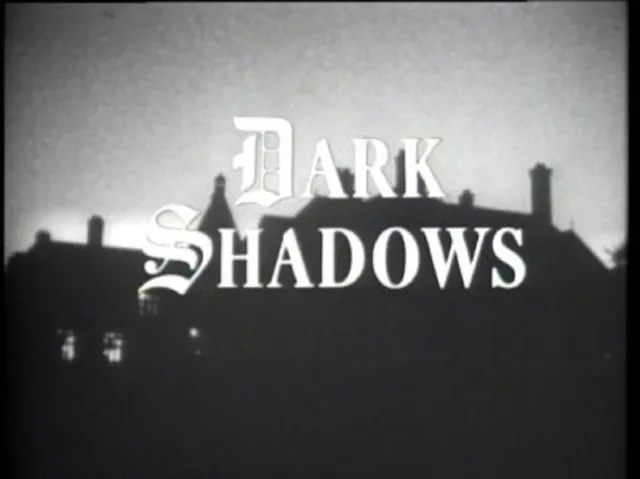
Long before vampires became fixtures of prime-time television, there was Collinwood.
The opening of Dark Shadows didn’t need elaborate effects. Waves crashed against a rocky coastline. The enormous Collinwood mansion stood in the distance. But the eerie music did most of the work.
I watched reruns of Dark Shadows in a cold, dark basement with my sisters. Barnabas Collins scared the hell out of me. My sisters used it to their advantage, making Barnabas seem even more frightening once the television was off and the dark corners of the basement were harder to ignore.
The opening credits made Collinwood feel less like a location and more like a warning.
Night Gallery
If Dark Shadows invited us into a haunted mansion, Night Gallery invited us into a haunted museum.
The opening sequence moves through a collection of disturbing paintings accompanied by a weird electronic score. Faces twist into unnatural shapes. Strange figures stare back from the canvas. The artwork feels like something recovered from a nightmare.
Then Rod Serling appears.
Serling was already permanently associated with strange television thanks to The Twilight Zone, but Night Gallery leaned much more deliberately into horror. Its opening credits made that distinction immediately clear.
This wasn’t a trip into another dimension.
This was a walk through a gallery where every painting seemed to have a terrible story attached to it.
The Outer Limits
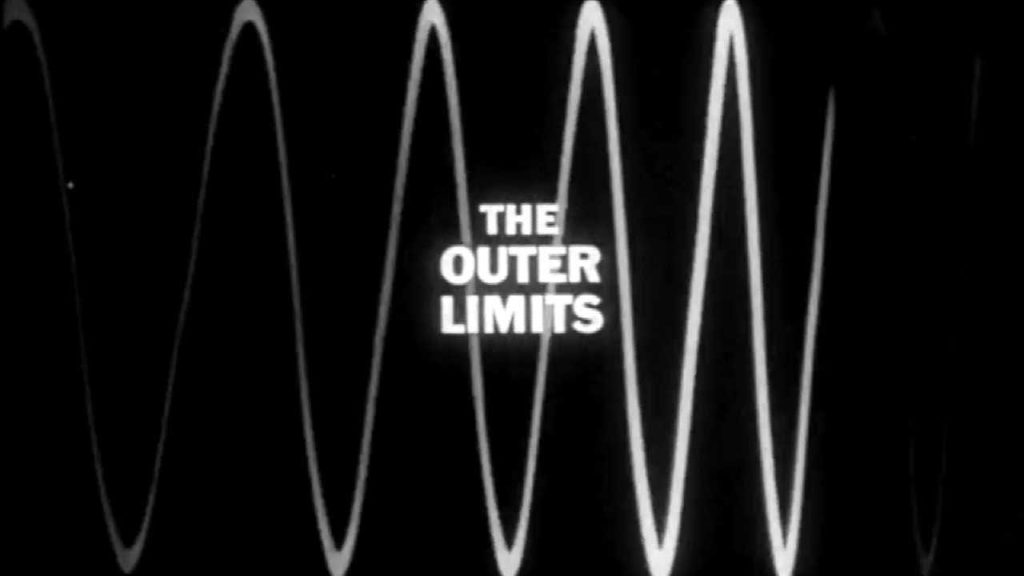
Then there was the show that simply took control of the television.
“There is nothing wrong with your television set.”
Not exactly the most reassuring thing for a television show to tell a child.
The original Outer Limits opening played with one of the simplest fears television could exploit: what if the television itself wasn’t under our control?
The screen flickered. The picture distorted. A disembodied voice informed viewers not to adjust their sets because, apparently, someone else was now controlling them.
Horror Comes Home
By the 1980s, we didn’t have to rely on reruns to find creepy television.
Horror was everywhere.
The horror genre exploded at the movies, and television wanted in. Syndication and cable created new places for horror programs to live, while familiar monsters and movie franchises began creeping onto the small screen.
The scary opening credits weren’t relics of a bygone era.
They belonged to us.
Friday the 13th: The Series
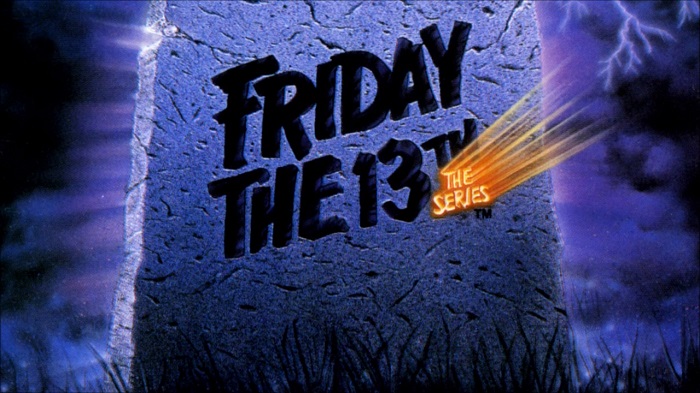
Despite the title, Jason Voorhees never showed up.
That didn’t make Friday the 13th: The Series any less creepy.
The show followed cousins Micki and Ryan as they attempted to recover cursed antiques sold from their late uncle’s shop, and the opening credits established that supernatural premise quickly.
There were shadows, lightning, ominous music, strange objects, and the wonderfully unsettling atmosphere of an antique shop filled with things that should probably have been left alone.
It also benefited from its name.
When the series debuted in 1987, there were already six Friday the 13th movies. Even if Jason wasn’t part of the series, the title carried years of slasher-horror credibility.
Freddy’s Nightmares
Freddy Krueger had already invaded our dreams.
Then he invaded our televisions.
In the late 1980s, Freddy was almost impossible to avoid. He was on posters, magazine covers, T-shirts, Halloween costumes, and eventually television.
Freddy’s Nightmares made him the host of an anthology series set in the decidedly unfortunate community of Springwood, Ohio.
The opening sequence was pure late-’80s horror television: dark, grimy, surreal, and built around the character everyone had tuned in to see.
Monsters
Then there was Monsters.
The opening begins like a parody of the traditional television family. A family gathers around the TV to watch their favorite program.
There’s just one problem. They’re not a regular family.
They’re monsters.
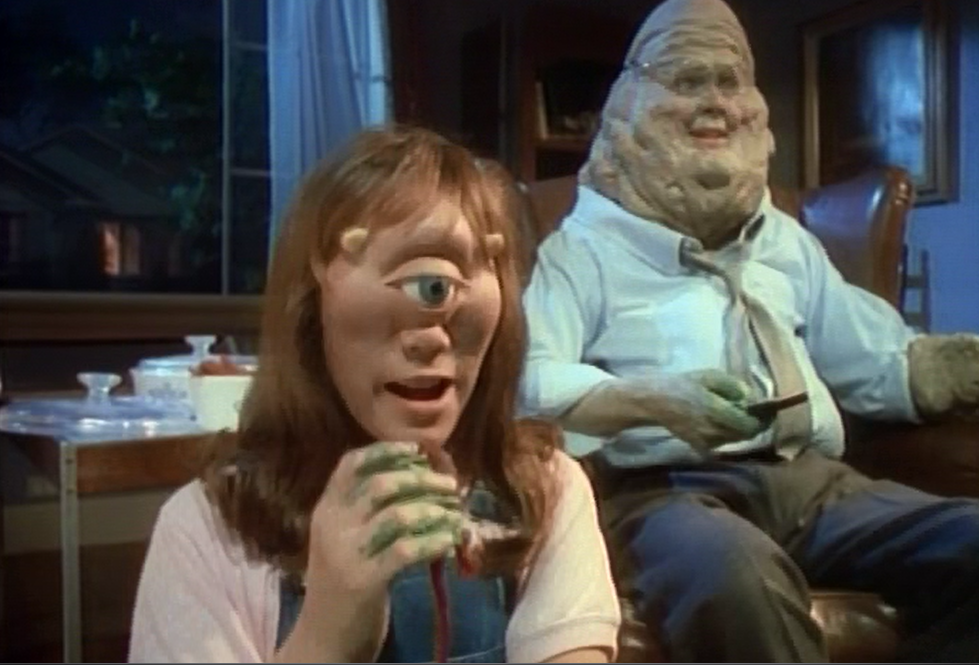
The sequence is funny, but it’s also wonderfully grotesque. What begins as an ordinary domestic scene becomes increasingly bizarre as we realize exactly who is sitting in the living room.
That combination of suburban normality and creature-feature weirdness captured the series perfectly.
It also returned to an idea that ran through so much scary television of the era:
The frightening stuff wasn’t necessarily somewhere far away.
Sometimes it was sitting in the living room.
Tales from the Crypt
In 1989, HBO jumped into the game and took television horror somewhere broadcast networks couldn’t.
Tales from the Crypt made that clear before the Crypt Keeper ever told his first terrible pun.
The camera approaches an enormous mansion, moves through its rooms, finds a hidden passage, descends a staircase, travels deeper underground, and finally arrives at a coffin.
Then the Crypt Keeper pops out with his creepy laugh!
It’s essentially a theme-park dark ride compressed into an opening-credit sequence.
Unlike the quiet dread of Tales from the Darkside, Tales from the Crypt wanted horror to be fun. The opening promised gore, monsters, bad people meeting worse fates, and a cackling corpse who thought the whole thing was hilarious.
But What If It Was Real?
Freddy wasn’t real. The Crypt Keeper wasn’t real.
Cursed antiques and monsters living in suburban houses weren’t real.
At least, television wasn’t trying to convince us they were.
Then came a different kind of program.
Shows that didn’t necessarily promise fictional horror. They talked about UFOs, ghosts, unexplained disappearances, strange creatures, and unsolved murders.
And they presented them as things that might actually have happened.
In Search Of…
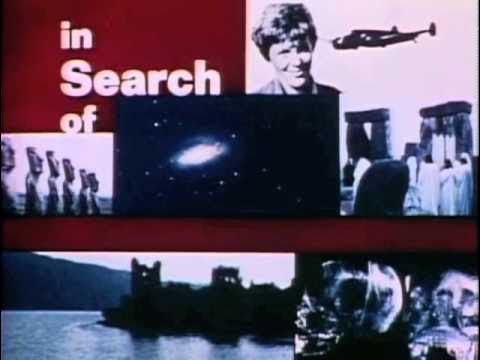
In Search Of…, hosted by Leonard Nimoy, explored everything from lost civilizations and historical mysteries to Bigfoot, UFOs, ghosts, psychic phenomena, and the Bermuda Triangle.
The opening credits established the mood immediately. Strange images appeared alongside an ominous theme while Nimoy introduced a world filled with mysteries that science and history hadn’t completely explained.
If Leonard Nimoy was standing there seriously discussing Bigfoot, there seemed to be at least some possibility that Bigfoot was wandering around out there.
And suddenly the woods behind the house deserved another look.
Unsolved Mysteries
Few television openings could change the atmosphere of a room as quickly as Unsolved Mysteries.
Before the theme music even begins, a disclaimer is read. Then the theme music begins. That unmistakable voice starts telling us about disappearances, murders, unidentified bodies, fugitives, ghosts, UFO encounters, and cases investigators couldn’t explain.
There were no rubber monsters, no elaborate creature effects, no Freddy Krueger, and that was the problem.
Unsolved Mysteries told us these things happened to actual people.
The show used dramatic reenactments, interviews, photographs, police reports, and appeals for information. Sometimes the person responsible for a crime hadn’t been caught.
The danger wasn’t safely contained inside the television.
Somewhere out there, according to Robert Stack, the story was still going on.
For a generation raised on fictional monsters, Unsolved Mysteries introduced an uncomfortable possibility:
Reality could be considerably scarier.
The Darkness Survives the ’90s
Television started to change in the 1990s.
The creepy opening credits didn’t disappear. They evolved.
One show brought paranormal paranoia into prime time. Another introduced younger viewers to a campfire where telling scary stories was the entire point.
Both understood something their predecessors had already discovered.
The anticipation of being scared could be almost as effective as the scare itself.
Are You Afraid of the Dark?
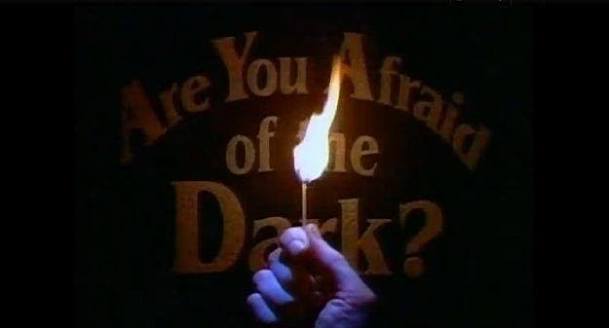
For younger viewers in the 1990s, Nickelodeon had its own doorway into the darkness.
The opening credits to Are You Afraid of the Dark? understood childhood fear remarkably well. Ordinary objects and places became threatening simply because they were empty, dark, or slightly out of place.
Then came the Midnight Society, a group of kids gathered around a campfire to tell scary stories.
I was in my early 20s when this show came out, so it wasn’t really for me. But I gotta admit, the opening sequence is good.
The X-Files
A blurry UFO.
A distorted face.
A falling silhouette.
A ghostly figure.
A strange handprint.
Then the whistle begins.
The opening credits to The X-Files remain one of television’s greatest openings, making seemingly disconnected images feel deeply unsettling.
The sequence looks like fragments pulled from paranormal photographs, government files, late-night documentaries, and the kinds of books about UFOs and unexplained phenomena that always seemed to occupy one particular shelf at the library.
Then the final message appears:
“The Truth Is Out There.”
Try to Enjoy the Daylight
Opening credits don’t quite work the same way anymore.
Streaming services offer a button allowing viewers to skip them altogether. Many modern shows barely have opening sequences beyond a title card. Even when elaborate credits exist, they’re something we can bypass on the way to the story.
We couldn’t bypass these.
Week after week, those opening notes played again.
The television slipped beyond our control.
We descended into the Crypt Keeper’s basement.
We watched ordinary landscapes turn dark.
And because we saw these sequences repeatedly, they became attached to something larger than the shows themselves. They became part of the ritual of watching television, particularly the slightly forbidden television that came on after dark.
The best of them understood that horror didn’t have to begin with a monster jumping onto the screen.
Sometimes all it took was a few unsettling notes, a strange image, or a voice quietly informing us that there was another world alongside the one we knew.
We entered that world every week.
And when Tales from the Darkside finally sent us back to ours, it left us with one last piece of advice:
“Until next time, try to enjoy the daylight.”