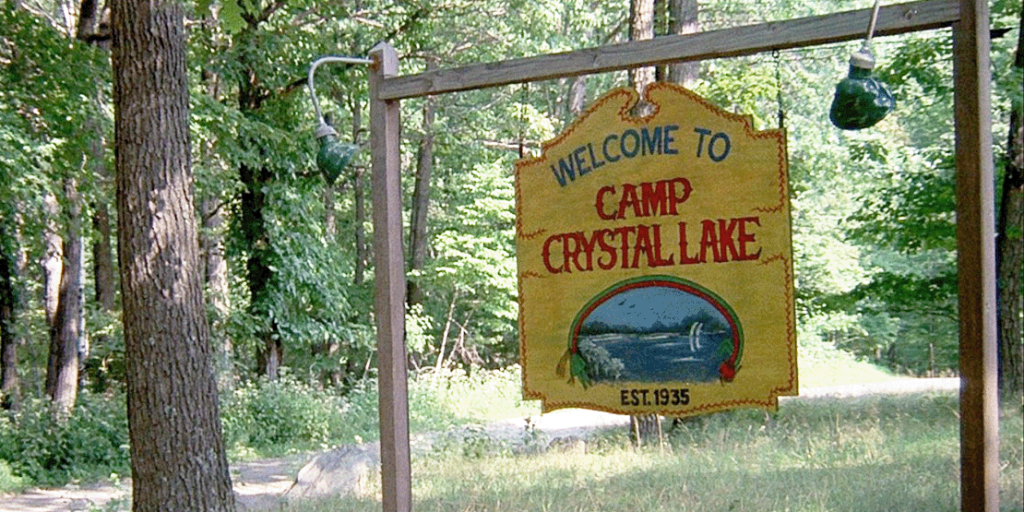
I’ve been a fan of Friday the 13th for more than forty years. I’ve watched Jason Voorhees terrorize Camp Crystal Lake, butcher his way through Manhattan, go to Hell, and even end up in outer space. I’ve enjoyed the good movies, the bad movies, and the downright ridiculous ones because I know exactly what I’m getting. A masked lunatic with a machete and a body count.
Now Peacock has given us Crystal Lake, an eight-episode prequel exploring the origins of Jason Voorhees and his mother, Pamela. Because apparently what the Friday the 13th franchise was missing was a lengthy psychological deconstruction of its most famous killer.
After watching the first episode, I have one question: Why?
The first episode is titled “Camp Crystal,” which already annoyed me before the show even got started. It’s Camp Crystal Lake. Why shorten it? What’s wrong with calling it “Camp Crystal Lake“? It’s a petty complaint, I know, but it pretty much sums up how I feel about this entire series.
Jason doesn’t need a drawn-out origin story. We don’t need to explore his childhood, understand his motivations, or discover some previously unknown trauma that turned him into a monster?
Welcome Back to Camp Crystal Lake
The first episode takes us back to the early 1970s, when a young Jason Voorhees drowns at the summer camp that will eventually become synonymous with bloody murder. His mother, Pamela, played by Linda Cardellini, is devastated by the loss and becomes increasingly isolated from the small community surrounding the lake.
Nearly a year after Jason’s disappearance, Pamela is still struggling with her grief and refuses to accept that her son is truly gone. His body was never recovered, and she remains convinced he’s somewhere out in the lake.
Meanwhile, the residents of Crystal Lake are trying to get on with their lives. And mysterious strangers arrive in town, bringing Pamela’s past back to haunt her.
It wouldn’t be a Friday the 13th property without a machete… and bloodshed. The episode opens with a gruesome image of Pamela covered in blood, removing a tooth from her hand. It’s a promising introduction that suggests we might be in for something nasty. I was interested in seeing where it was going.
Then the episode settles into something closer to a gloomy family drama, with Pamela’s grief and the growing mystery surrounding the town taking center stage. We’re introduced to characters, relationships and unanswered questions that are clearly intended to carry us through the rest of the season.
The series also strays from the original timeline. In the original movie’s chronology, Jason drowned in 1957, while Crystal Lake moves his drowning to 1971. I don’t think that necessarily takes away from either property. It just compresses the timeline for how long Camp Crystal Lake was closed down.
Having the town move on so soon after Jason’s death might give Pamela more reason to snap. She’s still grieving, while everyone around her seems ready to put the tragedy behind them.
One bright spot is Linda Cardellini, who does a great job as Pamela Voorhees.
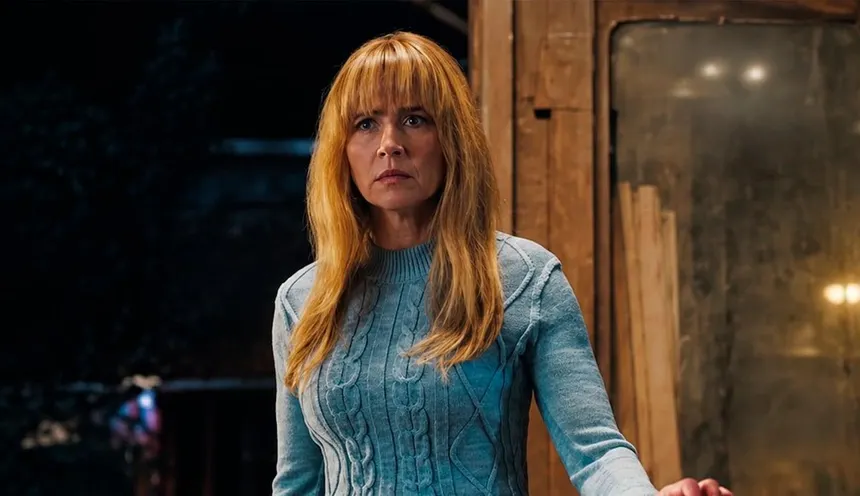
Cardellini brings a convincing mixture of grief, anger, and barely contained instability to the character. You can see the emotional damage in her performance, along with hints of the murderous woman we remember from the original film.
In the final scenes, when she’s mixing berries and honey and tuna together, you can see just how far Pamela has slipped. Cardellini makes the scene both disturbing and strangely convincing.
She’s more than capable of carrying a series. It’s easy to see her transforming into the murderous mother in the original Friday the 13th.
The Mystery Was the Point
One of the things that made Jason Voorhees such an effective horror villain was the mystery surrounding him. We knew the basics. He drowned at Camp Crystal Lake, his mother went on a murderous rampage, and somehow Jason returned to continue the family business.
Jason was an unstoppable, deranged killing machine. He didn’t need an elaborate motive, a tragic character arc, or an explanation for every horrible thing he did. He was a monster, and sometimes that’s all a monster needs to be.
But Hollywood seems to have developed an obsession with explaining every fictional character until there’s absolutely nothing mysterious left.
We’ve seen it before. Norman Bates gets an entire television series exploring his relationship with his mother. Chucky gets an increasingly convoluted mythology, and Carrie is being dragged out for yet another adaptation, because the original 1976 film, its sequel, and two previous remakes weren’t enough.
Instead of creating new monsters, Hollywood keeps returning to the same ones, determined to explain their histories, expand their stories, or reinvent them for another generation.
Simply being an evil, deranged monster isn’t enough anymore. Every villain needs childhood trauma, family secrets, psychological explanations, and some grand revelation about what made them the way they are. We’re supposed to understand them, sympathize with them, and discover the tortured human being hiding beneath the hockey mask.
I don’t want to understand Jason Voorhees. I certainly don’t want to sympathize with him, either. I want him lurking in the woods with a machete, waiting for the next group of teenagers to arrive at Camp Crystal Lake.
There was a time when horror understood what you didn’t know could be far more frightening than what you did. The unexplained noise in the basement, the figure standing in the shadows, the monster whose origins were never entirely clear. Those unanswered questions allowed our imaginations to do some of the work.
But modern Hollywood views unanswered questions as an opportunity to explain and deconstruction everything.
And just when I thought this (unnecessary) origin story couldn’t get any more ridiculous, the show introduces a mysterious conspiracy involving something called Project Argonaut.
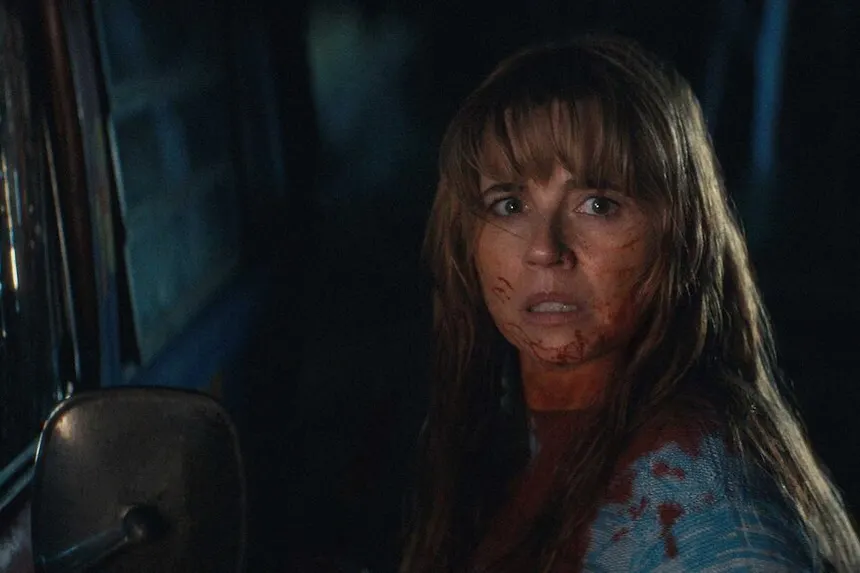
Drowning at summer camp and having a homicidal mother aren’t enough to explain Jason Voorhees anymore. Now we get a shadowy organization, mysterious strangers and what appears to be some kind of secret scientific experiment. Because if there’s one thing Friday the 13th was desperately missing, it was a plotline borrowed from Stranger Things.
Jason Voorhees doesn’t need a government conspiracy to explain why he’s an unstoppable killing machine. He doesn’t need a secret laboratory or classified military experiments to explain how he survived everything.
I didn’t turn on Crystal Lake hoping to discover the Voorhees family’s connection to a secret science project. I wanted a Friday the 13th story. Instead, I’m getting Stranger Things: Camp Crystal Lake Edition.
Enough With the Backstories
This isn’t just a horror problem. It’s an entertainment problem.
Now every character needs an origin story, even the most mundane character. Every successful movie needs a prequel and a spin-off and an expanded universe.
Nobody can simply exist as a character anymore. We need to know where they came from, how they became who they are and what emotional damage they suffered along the way.
The Friday the 13th franchise isn’t complicated. Its success came from an effective formula: isolated locations, creative kills and an increasingly indestructible masked killer.
Nobody walked out of a Friday the 13th moviewondering whether the filmmakers had sufficiently explored Jason’s emotional development.
Now we’ve reached the point where Peacock and A24 have devoted an entire series to exploring the Voorhees family history, and there’s already talk about what a second season might look like.
A second season? Seriously?
Just Give Him the Machete
After the first episode of Crystal Lake, I’m not impressed. Linda Cardellini is excellent, there are moments of effective horror and the production looks great. The show has a nice 1970s look and feel to it and the opening credits are a fantastic throwback to the original movie.
Overall, there’s enough here to keep me interested. But I have no desire to find out what Project Argonaut is. I can already tell you what it is… a dumb idea.
But the larger problem isn’t going away.
I don’t need every hero and villain deconstructed. I don’t need every childhood explored, every motivation explained or every mysterious character turned into a complicated psychological case study. Sometimes the best thing filmmakers can do is leave a little mystery intact and let the audience enjoy the monster for what it is.
Jason Voorhees doesn’t need eight episodes of therapy.
Just hand him a machete and point him towards a group of teenagers.